HIGASHIKAWA KOHEI – GO TO EXIST
Writer & Stand-Up Comedian
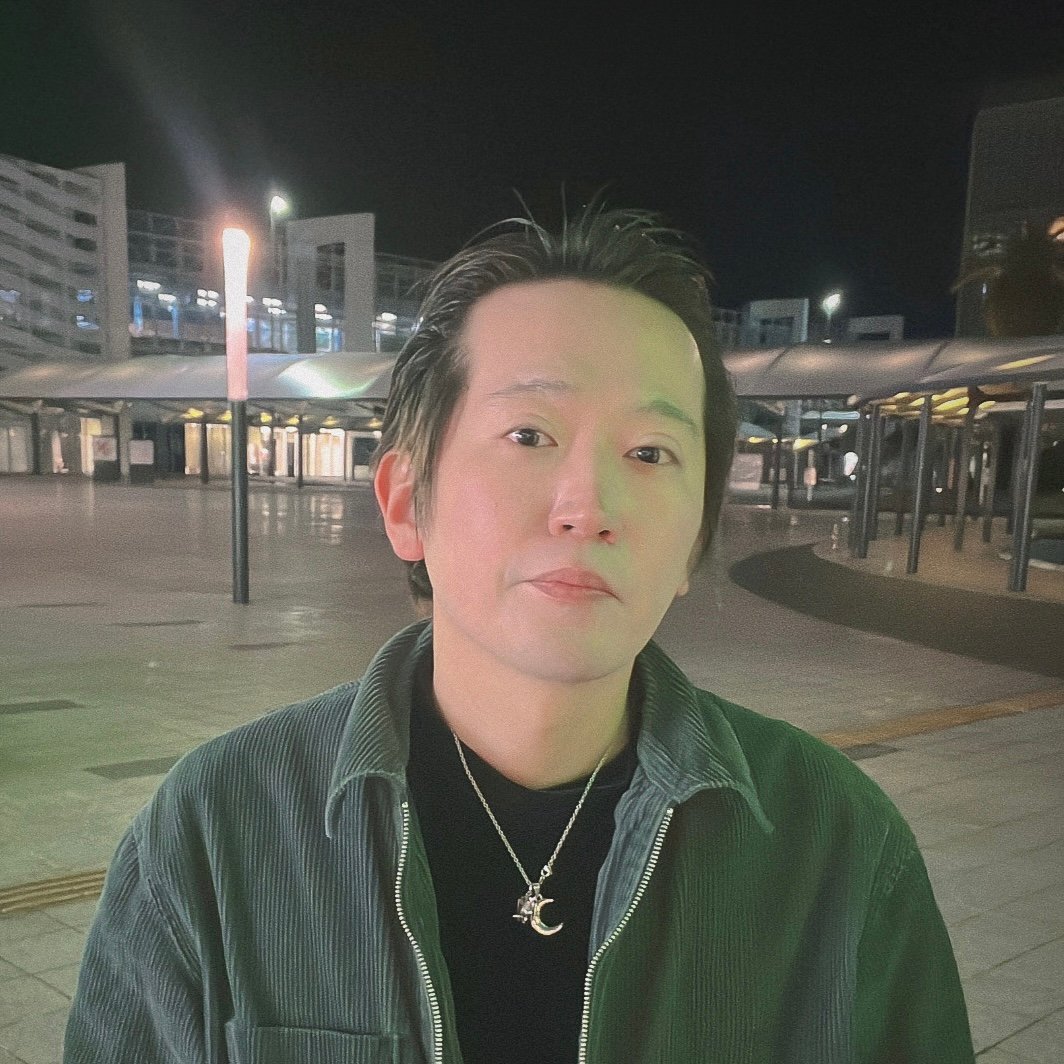
Kohei Higashikawa is a Japanese writer and stand-up comedian who began performing in Montreal. His work explores the concept of “everyday totalitarianism”—not through the lens of governments or politics, but through entertainment, conversation, and consumption. In his view, society governs people, entertainment tames their thoughts, and even language itself becomes standardized. Yet, this is not imposed by force; rather, it is a reality that we willingly accept.
His purpose as a writer is clear:
“To confront the world by confessing the contradictions of my own existence.”

Through psychological depth and metaphor, he captures the contradictions and pain of a world where individuals voluntarily commodify themselves. His writing exposes the emergence of “self-regulated humans” and resonates with themes found in Kafka’s alienation and Karl Ove Knausgård’s introspective prose. His work does not exclude any reader; instead, it forces them to unknowingly confront their own existence within a totalitarian system.
At the same time, Higashikawa embraces absurd comedy. For him, comedy is both a promotional tool for his ideas and a form of critique. His performances are not merely about making people laugh—they serve as a mirror reflecting societal contradictions and cultural distortions.
Background
Born and raised in a small city in western Japan, Higashikawa grew up without financial hardship and remained largely unaware of how society truly functioned. However, his perspective changed dramatically after graduating high school and experiencing a “blank year” before university.
The moment he lost the label of “student,” the way people treated him changed overnight. Adults and friends alike began to act as if he had somehow become a lesser person. It was then that he realized:
“A person’s very existence is shaken by the structures and evaluations imposed by society.”
He later moved to Tokyo for university, only to witness the same phenomenon on a much larger scale. Job hunting exposed him to the cold reality of societal expectations, making him painfully aware of his inability to conform. Unable to adapt, he left Tokyo and drifted west, seeking a fresh start.
But just as he was about to begin a new chapter, he found himself trapped in an invisible prison—chronic pain. When ordinary life became impossible, he turned to writing as a means of proving his existence. His novel, Go To Exist, was not only a work of fiction but also a philosophical reckoning with himself.
This work introduces his own concept: Coexistential Orientation—the idea that even when our thoughts are infiltrated by the politics hidden within society, culture, and daily life, we are naturally inclined to struggle with how to recognize and engage with the existence of the person before us. In that moment, the world is stripped of its preconceptions, allowing us to truly see one another.
Society often reduces people to labels—“hikikomori,” “unemployed,” “dropout”—but Coexistential Orientation transcends reason and judgment. It is “the ability to actualize each other’s presence in the same space”—a fundamental human inclination that enables us to affirm our own existence without fear of scrutiny or evaluation.

A Back Cover from GO TO EXIST
Once, he had high hopes for anime and manga. But as he grew older, the constraints on free expression and the harsh realities of the entertainment industry turned his anticipation into disillusionment. Yet, the urge to tell stories never faded. Instead, it evolved into his present-day writing.
The greatest influence on his creative journey was chronic pain. It was only when he realized he could no longer live “normally” that writing became inseparable from his existence.
Influence
Higashikawa considers himself more influenced by philosophy than by literature. While he has read works like Nikolai Gogol’s Diary of a Madman and J.D. Salinger’s The Catcher in the Rye, it was philosophy that truly shaped his thinking. His key influences include:
- Hannah Arendt – The Human Condition
- Axel Honneth – Reification
- Jean Baudrillard – The Consumer Society
Outside of literature, one of the most impactful works in his life was the animated series Bojack Horseman. The show’s use of “downer endings” and existential themes deeply influenced his writing. More importantly, had he never watched it, he might never have pursued stand-up comedy.

Final Thoughts
Through both literature and comedy, Kohei Higashikawa continues to explore the contradictions of modern society and the fundamental nature of human existence. His work may appear to be fiction or comedy on the surface, but beneath it lies a sharp and ever-present question:
“Are we truly free?”
Readers inevitably find themselves drawn into his inquiry, confronting their own existence in ways they never expected.
And in the moment when Higashikawa stands on stage or puts words to paper, a new form of literature is born.
Witness that moment.